Let’s take a deeper dive into the description of the Farm Food CoOp, expanding on the key elements and their implications:
Deep Dive:
Farm Food CoOp – A Vision of Sustainable Urban Agriculture
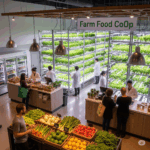
The image presented paints a compelling picture of a Farm Food CoOp that is not just a marketplace, but a pioneering hub for sustainable urban agriculture, specifically through indoor farming.
- The Heart of Innovation: Towering Vertical Farms & Advanced Technology
At the core of this CoOp’s identity are the “towering vertical farms.” This isn’t just about growing plants; it signifies a commitment to cutting-edge agricultural technology.
- Space Optimization: Vertical farming is a revolutionary approach that maximizes food production in minimal footprints, making it ideal for urban environments where land is scarce and expensive. The “towering” aspect suggests multiple layers of cultivation, significantly increasing yield per square foot.
- Controlled Environment Agriculture (CEA): The mention of “bright LED grow lights” and “advanced hydroponic systems” points directly to Controlled Environment Agriculture. This means precise control over light spectrum, temperature, humidity, CO2 levels, and nutrient delivery. This level of control leads to:
- Optimal Growth: Plants grow faster and healthier, often with higher nutritional value, as they are not subject to the vagaries of outdoor weather or soil conditions.
- Resource Efficiency: Hydroponics, in particular, dramatically reduces water usage compared to traditional field farming, often by 90% or more, as water is recirculated.
- Pest & Disease Reduction: The enclosed environment minimizes exposure to pests and diseases, reducing or eliminating the need for chemical pesticides.
- “Leafy greens and colorful vegetables”: This suggests a focus on high-value, fast-growing crops that thrive in vertical farm settings, meeting immediate consumer demand for fresh produce.
- The Human Element: Expertise and Engagement
The presence of “staff members in crisp white lab coats meticulously tending to the plants” is highly significant:
- Professionalism & Expertise: The lab coats symbolize a scientific and professional approach to farming. These aren’t just farmers; they are likely agricultural technicians or horticulturists, applying precise knowledge to ensure optimal plant health and yield.
- Attention to Detail: “Meticulously tending” highlights the care and precision involved in indoor farming. This is a hands-on process, despite the advanced technology, ensuring quality and maximizing output.
- Consumer Trust: Seeing dedicated, professional staff instills confidence in the consumer regarding the quality and safety of the produce.
- The Marketplace: Freshness, Accessibility, and Community
The description shifts to the consumer experience, emphasizing the direct farm-to-table model:
- “Baskets overflow with freshly harvested produce”: This evokes abundance and immediate freshness. The produce is literally coming from just steps away, eliminating long transit times and preserving nutritional value and flavor.
- “Shoppers, carrying reusable bags, are seen engaging with friendly staff”: This detail reinforces the CoOp model:
- Sustainability: Reusable bags are a subtle nod to the CoOp’s broader commitment to environmental responsibility.
- Community & Connection: The interaction between shoppers and staff highlights the cooperative aspect and fosters a sense of community. Consumers can ask questions directly about their food, fostering transparency and trust.
- Accessibility: By being in an urban setting, the CoOp makes fresh, high-quality produce more accessible to city dwellers who might otherwise rely on food transported from distant farms.
- Aesthetic & Brand Identity: Modernity Meets Nature
The visual style of the CoOp is intentionally crafted:
- “Clean lines, natural wood accents, and a minimalist aesthetic”: This design choice communicates several messages:
- Modernity & Efficiency: Clean lines often signify efficiency and contemporary design, aligning with the high-tech nature of indoor farming.
- Connection to Nature: The “natural wood accents” provide a grounding element, reminding visitors of the organic nature of the produce, even within an industrial setting. It bridges the gap between technology and nature.
- Transparency: A minimalist design often implies nothing to hide, reinforcing the CoOp’s commitment to transparency in its operations.
- “Energetic and inviting atmosphere”: Despite the industrial aspects of vertical farming, the CoOp manages to create a welcoming space, encouraging repeat visits and fostering a positive association with urban agriculture.
- The Broader Message: Future of Food & Sustainability
Ultimately, the image and its description convey a powerful message about the “innovation and promise of the future of food.”
- Sustainability: The emphasis on reduced water use, local production (cutting down transportation emissions), and potentially no pesticides paints a strong picture of environmental stewardship.
- Food Security: Indoor farming can contribute to food security by providing reliable, year-round access to fresh food, regardless of external climate conditions or seasonal limitations.
- Community Impact: By establishing a local food source, the Farm Food CoOp strengthens the local economy and provides healthy options to the community.
In essence, the Farm Food CoOp depicted is not just selling food; it’s presenting a solution to contemporary food challenges, a model for sustainable living, and a vibrant community hub where technology meets nature to nourish both body and planet.